Venous Sclerosants: Cardiovascular Adverse Effects and Misuse
Key Overview
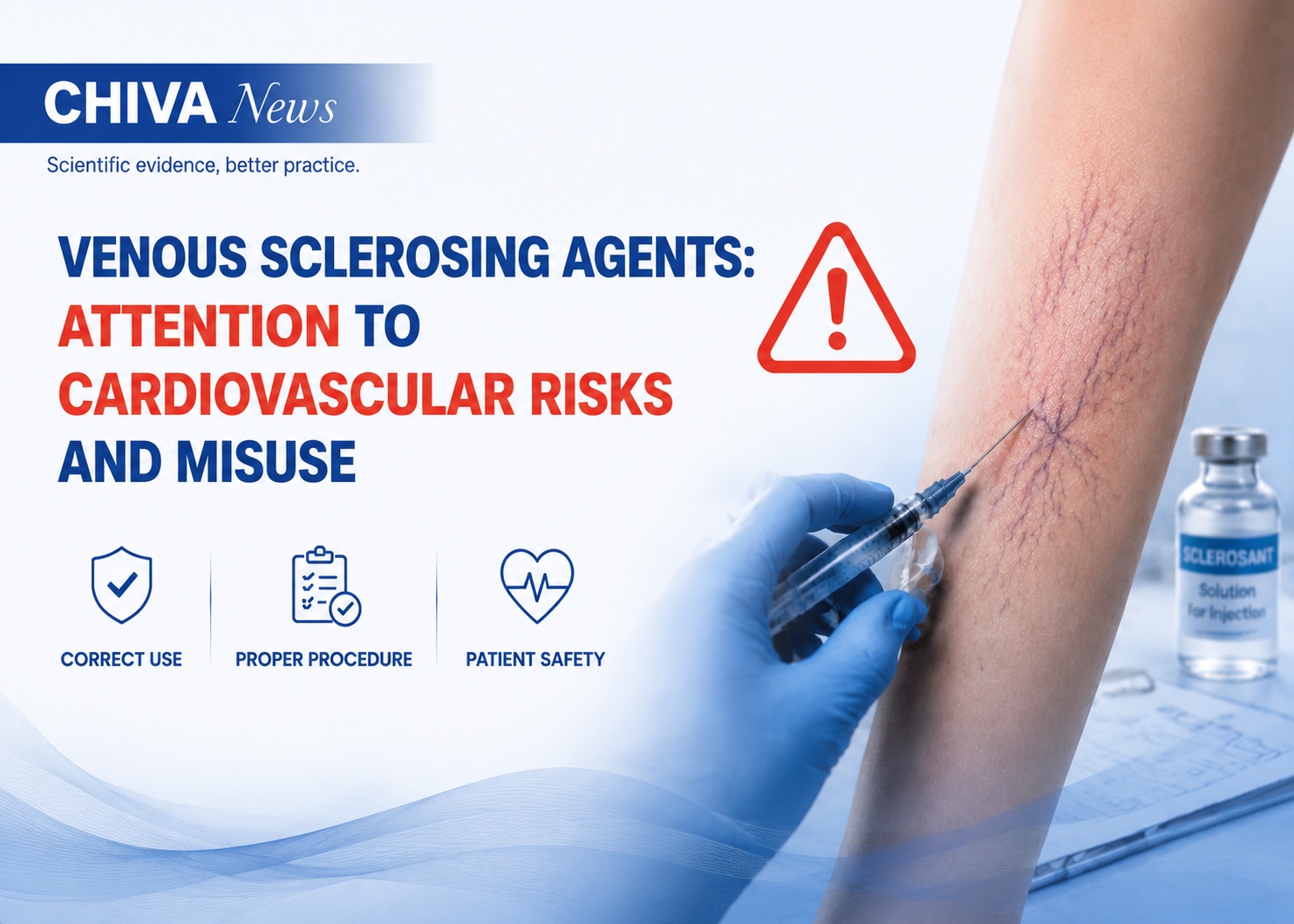
• Study Basis: In France, the marketed venous sclerosants are Aetoxisclerol (the most widely used) and Fibrovein. These products are under heightened surveillance due to rare but severe, even fatal, cardiovascular adverse events (e.g., deep vein thrombosis, pulmonary embolism, arrhythmias) and cases of misuse in preparation (e.g., solution dilution) and administration (e.g., single injection site). Despite efforts to inform physicians and patients about these risks, including updated guides, product labels, and prescriber instructions for Aetoxisclerol, cardiovascular adverse events continue to be reported—even in patients with contraindications. Strict compliance with contraindications, risk factor assessment, and preparation and administration guidelines is essential.
Risk Reduction Measures
To enhance treatment safety, the French National Agency for Medicines and Health Products Safety (ANSM) has implemented several risk-reduction measures aimed at raising awareness among prescribers and patients. For example, in 2025, ANSM:
- Updated the Aetoxisclerol prescriber guide to clarify preparation and administration precautions for both liquid and foam forms.
- Requested that the manufacturer provide a patient guide, to be systematically given prior to any injection.
- Improved adverse event reporting procedures to strengthen knowledge on venous sclerosant risks.
Tutorials on reporting adverse events are now available: one for patients and another for healthcare professionals. Accurate reporting is essential to regulatory surveillance and helps improve patient safety by enabling authorities to take action when necessary.
Post-Injection Monitoring
ANSM reminds healthcare professionals that, before any sclerotherapy procedure, patients must be informed of the risks, receive the patient guide, and provide personal and family medical history (including allergies, migraines, cardiac diseases, thromboses, diabetes, obesity, smoking, or other limb disorders).
After injection, patients should be monitored while lying down for approximately 10 minutes and allowed to stand only under professional supervision. Emergency equipment, including a defibrillator, must be readily available, and staff should be trained in first aid and management of allergic reactions. Patients should also be instructed to seek immediate medical care if experiencing palpitations, hypotension, chest discomfort, cough, shortness of breath, transient visual problems, dizziness, headaches, speech difficulties, paresthesia, limb weakness, or calf pain with or without swelling and redness.
Summary
Ensuring patient safety requires careful assessment of contraindications and risk factors, strict adherence to preparation and administration protocols, and post-injection monitoring. These measures help mitigate the rare but serious cardiovascular risks associated with venous sclerosants, supporting safer sclerotherapy practices consistent with the principles emphasized in CHIVA methodology.、
References
Univadis.fr. Venous sclerosants: cardiovascular adverse effects and misuse. March 17, 2026.
Disclaimer
This article is based on publicly available reports and is intended for professional information exchange and content research. It does not constitute specific clinical advice.